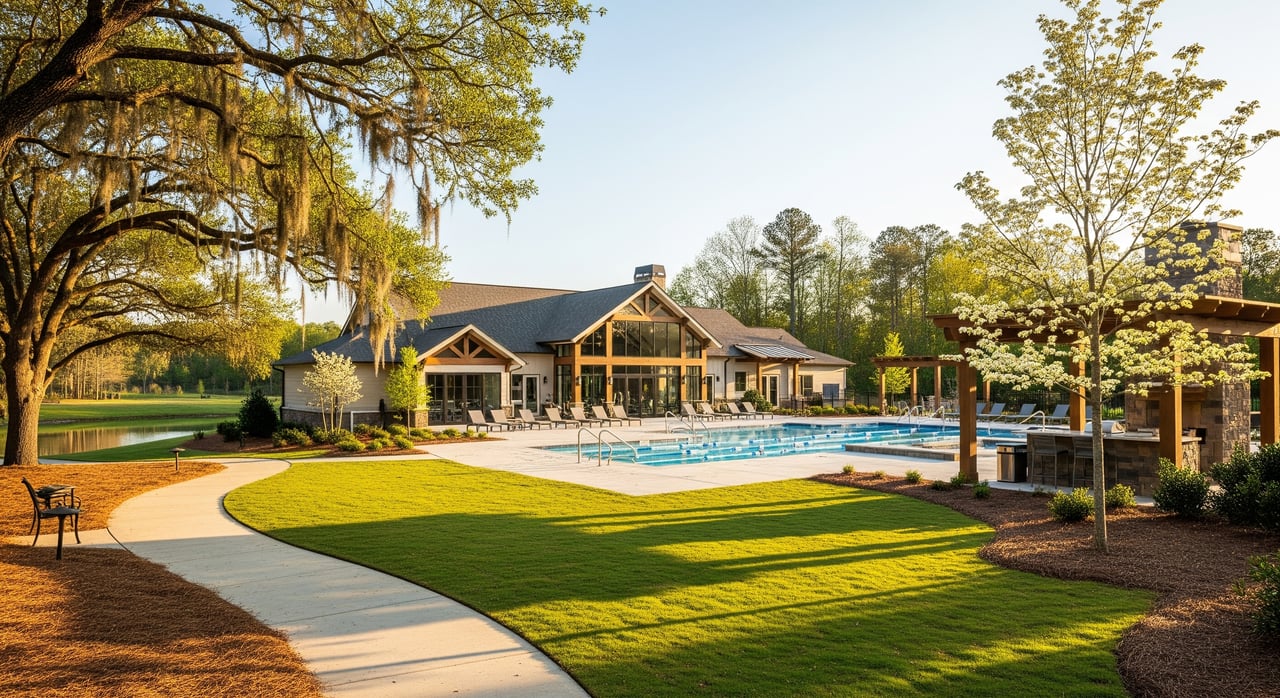
Choosing between new home communities in Apex can feel overwhelming when every brochure promises resort-style living. You want amenities that fit your day-to-day life, not just pretty pictures. In this guide, you’ll get a simple way to compare pools, trails, playgrounds, dog parks, and HOA services so you can pick the right neighborhood with confidence. Let’s dive in.
Know Apex context
Apex sits in Wake County within the Research Triangle, where steady growth has pushed builders to compete on community features. Location still matters as much as amenities. Map your commute and daily routes against US-64, US-1, NC-55, and I-540 to understand real travel times to work, shopping, and schools.
The climate is warm and humid-temperate, which means outdoor amenities see long seasonal use. Pools, trails, and playgrounds are typically busiest from late spring through early fall. Town and county parks and greenways can extend what you get inside your neighborhood, especially if the community connects to the municipal system.
Private amenities must follow local building and health codes and the HOA’s rules. In North Carolina, HOAs operate under state statutes and the community’s governing documents. Plan to review those documents before you finalize a shortlist.
Your amenity pre-check
Use this quick pre-check for every community on your list:
- Ownership and access: Confirm whether amenities are HOA-owned, shared, or public. Ask about guest policies and any access controls.
- Location and walkability: Note distance from your potential home, sidewalks, crosswalks, lighting, and sightlines.
- Hours and rules: Look for posted hours, reservations, and noise limits.
- Maintenance and funding: Ask who maintains each amenity and how costs are funded through HOA dues or assessments.
- Liability and insurance: Confirm who insures the amenities and whether there are waivers or safety rules.
- Future plans: Check for phasing. If the pool or trail is planned later, ask for written timelines or guarantees.
Pools
If a pool is a must-have, verify details that affect daily use and long-term cost.
- Type and features: Lap lanes, resort features, splash pad, heated, indoor or outdoor, and a dedicated children’s area.
- Season and staffing: Opening and closing months, hours, and lifeguard policy. Policies vary by managing entity and local code, so confirm whether the pool is staffed or self-supervised.
- Capacity and access: Size, occupancy limits, gated entry, key fob use, and guest sign-in.
- Safety and care: Posted safety rules, lifesaving gear, water treatment standards, and cleaning schedules.
- Cost impact: How construction was funded, whether replacement reserves are set aside, and any planned special assessments.
Local tip: With Apex’s long warm season, a pool can be high value. Confirm if it will open in your first year or if delivery is tied to a later phase.
Trails and greenways
Trails can raise quality of life and support resale, especially when they connect beyond the neighborhood.
- Type and surface: Internal loop vs. connection to town greenways, paved or crushed stone, and ADA accessibility.
- Connectivity: Links to parks, schools, shops, nearby neighborhoods, and the broader greenway network.
- Safety features: Lighting, clear sightlines, and any emergency call features.
- Maintenance: Leaf removal, resurfacing cycles, and storm damage response.
Local tip: Communities that connect to Apex greenways give you more miles with less HOA maintenance cost. Ask if a formal easement or connection is planned.
Playgrounds
Play spaces should be safe, age-appropriate, and easy to supervise.
- Design and age range: Equipment suited to different ages and posted age guidelines.
- Safety surfacing: Rubber mulch or poured-in-place surfaces, plus ADA access.
- Comfort and visibility: Shade structures, benches, and sightlines for supervision.
- Care and records: Inspection logs, repair schedules, and liability coverage.
Local tip: Proximity matters. If you have young children, note whether the playground is within a short, sidewalk-connected walk.
Dog parks
If you have pets, a well-designed dog park can be a daily convenience.
- Size and separation: Square footage and small vs. large dog areas.
- Rules and registration: Hours, vaccination requirements, and bag stations.
- Safety and drainage: Fencing height, double-gated entry, surfacing, and shade.
- Upkeep and fees: Waste pickup frequency, cleaning schedule, and any user fees.
Local tip: Warm months increase wear and tear. Ask how the HOA handles drainage, odor control, and heat-related maintenance.
HOA services
Look beyond the amenities to the services and management that keep them running.
- Included services: Common area landscaping, streetlights, sidewalks, trash and recycling, pest control, and rare snow or ice response.
- Staffing: On-site property manager or maintenance staff, or third-party management.
- Management model: Professionally managed vs. volunteer board, and how homeowners communicate with the HOA.
- Financial health: Current budget, presence and date of a reserve study, recent special assessments, and any plan for dues increases.
- Rules and enforcement: Architectural review process, exterior change rules, pet policies, and short-term rental guidelines.
- Community programs: Events, fitness classes, and social committees that help neighbors connect.
Local tip: In North Carolina, HOAs commonly maintain common areas. For new communities, early budgets can understate long-term costs, so a current reserve study is important.
Documents to request
Before you commit, ask for these items so you can verify what is promised and how it is funded.
- Governing documents: Recorded Declaration or CC&Rs, Articles, Bylaws, Rules and Regulations, and amendments.
- Financials: Current-year budget, most recent reserve study or funding policy, 1 to 3 years of dues history and any special assessments, operating and reserve balances.
- Amenity plans and phasing: The amenity master plan, phasing schedule, completion guarantees, and any developer rights to delay or modify amenities.
- Management and contracts: Management company name and contracts for landscaping, pool operations, trash, pest control, and janitorial services.
- Insurance and liability: HOA insurance summary and any required homeowner waivers or policies for amenity use.
- Rules and procedures: Amenity reservation rules, guest policies, enforcement procedures, and fine schedules.
- Inspection and maintenance: Pool inspection records, playground safety inspections, and amenity maintenance logs if any facilities are already open.
- Sales vs. records: Compare marketing claims to recorded documents and note any discrepancies.
Why this matters: Planned amenities sometimes shift in timing or scope. Financial records show whether the association can maintain features without frequent special assessments.
Scoring rubric
Use a simple rubric to compare communities side by side. Rate each category from 1 to 5, multiply by the weight, then total your score.
- Proximity and walkability to amenities, 20 percent
- Amenity quality and safety, 25 percent
- Connectivity to greenways and local destinations, 15 percent
- HOA management and financial health, 25 percent
- Cost impact from dues and assessments, 15 percent
Quick filters
Use these filters to narrow your list fast.
- Amenity timing: If you need immediate access, remove communities where key amenities are more than 12 months out.
- Fee tolerance: Set a maximum HOA fee that fits your budget. Keep only communities where the value matches the cost.
- Rules friction: If strict architectural rules or rental restrictions are deal-breakers, filter accordingly.
Example priorities
- Family with young kids: Prioritize playground proximity, shaded zones, pool safety, and traffic calming inside the neighborhood.
- Dog owner: Focus on dog park size, drainage and cleanliness, leash rule enforcement, and trail access.
- Active adult or commuter: Look for greenway connections, low-traffic streets, predictable HOA costs, and minimal yard work.
Site visit questions
When you tour the model or the site, bring this list.
- Who owns and insures each amenity, and is it deeded to the HOA?
- Is the amenity open now? If not, what is the projected opening date and what guarantees are in writing?
- What are the rules, guest policies, and reservation requirements for each facility?
- How often is the pool, playground, or trail inspected and maintained? Can I see maintenance logs?
- How are my dues allocated, and what percent goes to amenity maintenance?
- Are there any recent special assessments or planned dues increases in the next 1 to 3 years?
- For the pool: Are lifeguards provided, and are there age restrictions or swim tests?
- For trails: Does the system connect to town greenways, and who handles storm clean-up?
- For dog parks: How often is waste removed, and is vaccination registration required?
- Can I review the reserve study and last year’s financials today?
Resale and negotiation
Amenities can help or hurt resale depending on their quality and cost. Completed, well-maintained amenities with strong reserves appeal to a wider buyer pool. Very high dues or restrictive rules can narrow interest, so balance lifestyle benefits against monthly costs.
If an amenity is not yet complete, treat delivery as a negotiation point. Ask for clear deadlines, recorded covenants that require completion, or a contribution to reserves at closing. Document what is promised, by whom, and when.
Next steps
- Map your daily routes to see how each location fits your life.
- Shortlist 2 to 4 communities that match your must-haves and fee tolerance.
- Request governing documents, financials, and amenity plans from the builder or HOA.
- Score each community using the rubric, then visit at different times of day.
- Confirm maintenance standards and safety policies for the amenities you will use most.
If you want a second set of eyes on the documents or your shortlist, connect with a team that understands development details and HOA operations. Schedule a consultation with Ace Development Group to start your build or tour a home today.
FAQs
How long are pools typically open in Apex new communities?
- Outdoor pool seasons vary by community. With Apex’s warm climate, many open in late spring and close in early fall, but you should confirm the posted calendar and whether the pool is heated.
Do HOAs in Apex usually include yard care or just common areas?
- It depends on the community. Many North Carolina HOAs cover common area maintenance and services like streetlights, while individual lot yard care varies by neighborhood and must be confirmed in the governing documents.
How can I tell if a trail connects to the town greenway network?
- Ask for a community trail map and any recorded easements. Confirm whether there is a formal connection to the Town of Apex greenways and who maintains each segment.
Are lifeguards required at private HOA pools in Apex?
- Requirements vary by local code and by the HOA’s policy. Ask whether the pool is staffed or self-supervised, and review posted safety rules and inspection records.
What documents should I review before choosing a new Apex community?
- Request the CC&Rs, bylaws, rules, current budget, reserve study, amenity plan and phasing schedule, insurance summary, maintenance logs, and any special assessment history.
What is a quick way to compare multiple Apex communities?
- Score each on proximity, amenity quality, connectivity, HOA health, and cost. Rate 1 to 5 in each category, apply the weights, and total the scores to make an apples-to-apples comparison.